Aajonus in his bibliography in We Want to Live refers to several researchers, anthropologists, and doctors who were documenting the benefit of raw meat as early as the early 1900s. While Aajonus re-popularized this diet for humans in the late-90’s, this was clearly not a new, fad diet, rather, a well documented remembering of the optimal diet for ALL human beings.
Unfortunately, the raw meat dietary recommendations made by Dr. Weston A. Price and Dr. Francis Pottenger back in the early 1900’s have been watered down by their foundations, posthumous, and contemporary influencers, apparently to appeal to a larger population on the SAD (Standard American Diet) supporting unhealthy eaters in taking baby steps towards health.
We feel like baby steps are okay, however, eventually these baby-steppers will hit a wall and be surprised that they haven’t achieved optimal health after a few weeks, months, or even a few years with these baby-step dietary guidelines.
Our health is failing on those baby-step diets. Aajonus is one of the few nutritionist, with his Primal Diet™, who has stayed true to the invaluable, unquestionable conclusions about raw meat uncovered by Price, Pottenger, Stefansson, Howell, Steuver, Brody, and others.
So, let’s go into the treasured works of these true research geniuses who inspired Aajonus and remember what they actually recovered, so we can start turning our health around now instead of being mislead down the long and winding, watered down path to disease.
Today, we will review:
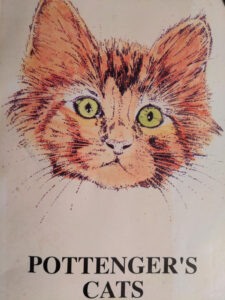
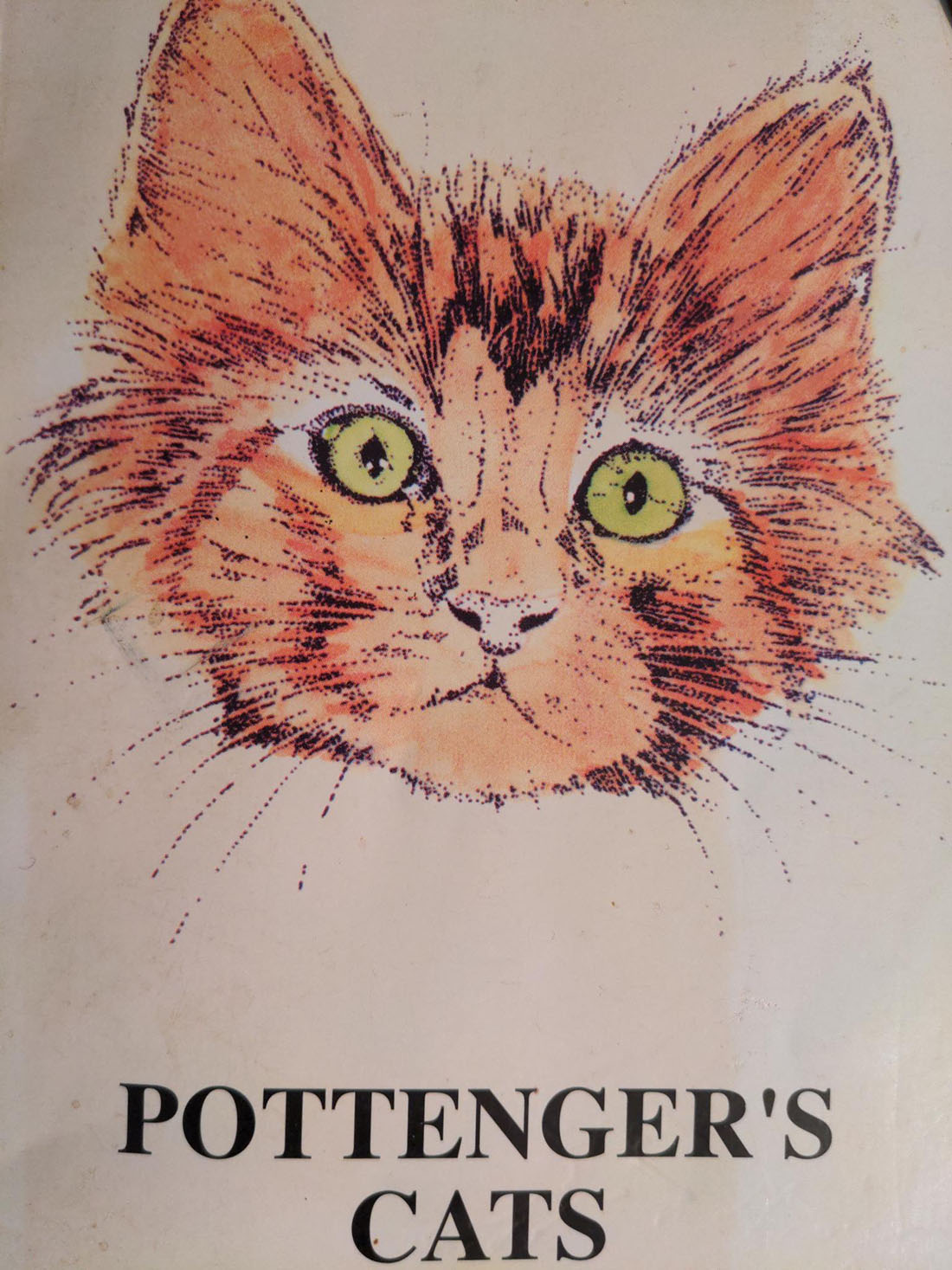
Pottenger’s Cat’s: A Study in Nutrition, by Dr. Francis M. Pottenger, Jr., MD
More than any other single individual, Francis Pottenger was responsible for opening what resembled Pandora’s box of research concerning nutrition. Between 1932 and 1942 Pottenger conducted feeding experiments on cats, dogs, cows, chickens, guinea pigs, and humans. He fed test groups raw food versus cooked food and the contrast between all the animals that received cooked food versus raw was startling.
The Cats
Test Group #1: Cats fed raw meat, raw milk, and cod liver oil
Test Group #2 : Cats fed cooked meat, raw milk, and cod liver oil
Results:
Test Group #1 Raw Meat Litter:
Striking uniformity in their sizes and skeletal development. From generation to generation, they maintained a regular, broad face with prominent malar and orbital arches, adequate nasal cavities broad dental arches and regular dentition. The male and female maintain distinct anatomical features. The membranes are firm and of good pink color and with no evidence of infection or degenerative change. Tissue tone is excellent and the fur is of good quality with very little shedding noted. Dental inflammation or disease is seldom seen. The calcium and phosphorus content of their femurs remains consistent and their internal organs show full development and normal function.
Over their life spans, they prove resistant to infections, to fleas and to various other parasites, and show no signs of allergies. In general, they are gregarious, friendly and predictable in their behavior patterns, and when thrown or dropped from 6 feet to test their coordination, they always land on their feet and come back for more “play”. These cats reproduce one homogeneous generation after another with the average weight of the kittens at birth being 119 grams. Miscarriages are rare and the litters average five kittens with the mother cat nursing her kittens without difficulty.
Test Group #2 Cooked Meat Litter:
Reproduced a heterogeneous strain of kittens, each kitten in a litter being different in size and skeletal pattern. When comparing x-rays, there are almost as many variations in the facial and dental structures of the second and third generation cooked meat fed animals as there are animals. Evidence of deficiency is written so plainly on their faces that with a little training, any observer can be almost certain that a given cat has been subjected to a deficient diet or that it comes from a line of cats that has suffered from deficient nutrition. The long bones of cooked meat cats tend to increase in length and decrease in diameter with the hind legs commonly increasing in length over the forelegs. The trabeculation (internal structural mesh of the bones) becomes coarser and shows evidence of less calcium. In the third generation, some of the bones become as soft as rubber and a true condition of osteogenesis imperfecta is present.
Heart problems; nearsightedness and farsightedness; underactivity of the thyroid or inflammation of the thyroid gland; infections of the kidney, of the liver, of the testes, of the ovaries and of the bladder; arthritis and inflammation of the joints; inflammation of the nervous system with paralysis and meningitis – all occur commonly in these cooked food fed cats. A decrease in visceral volume is evidenced by the diminishing size of their thoracic and abdominal cavities. Frank infections of the bone appear regularly an often appear to be the cause of death. By the time the third generation is born, the cats are so physiologically bankrupt that none survive beyond the sixth month of life, thereby terminating the strain.
A study of the microscopic sections of the lungs of second and third generation deficient cats show abnormal respiratory tissues. The lungs show hyperemia, some edema and partial atelectasis, while the most deficient show bronchitis and pneumonia. In several cases, a hypothyroid condition exists with the thyroid gland showing scanty colloid and small acini, again not observable in the raw meat fed cats.
Cooked meat cats show much more irritability. Some females are even dangerous to handle and three of the test group are named Tiger, Cobra, and Rattlesnake because of their proclivity for biting and scratching. The males, on the other hand, are more docile, often to the point of being unaggressive and their sex interest is slack or preverted. In essence, there is evidence of a role reversal with the female cats becoming the aggressors and the male cats becoming passive as well as evidence of increasing abnormal activities between the same sexes. Such sexual deviations are not observed among raw meat cats.
Vermin and intestinal parasites abound. Skin lesions and allergies appear frequently and are progressively worse from one generation to the next. Pneumonia and empyema are among the principle causes of death in adult cats while diarrhea followed by pneumonia takes a heavy toll on kittens.
At autopsy, cooked meat fed females frequently present ovarian atrophy and uterine congestion, and the males often show failure in the development of active spermatogenesis. Abortion in pregnant females is common, running about 25% in the first deficient generation to about 70% in the second generation.
Deliveries are generally difficult with many females dying in labor. The mortality rate of the kittens also is high as the kittens are either born dead or born too frail to nurse. Following delivery, a few mother cats steadily decline in health only to die from the obscure physiological exhaustion in about three months. Other cats show increasing difficulty with their pregnancies and in many instances fail to become pregnant. The average weight of the kittens born of cooked meat fed mothers is 100 grams, 19 grams less than the raw meat nurtured kittens.
Regenerating Cats
When cats of the first and second generation cooked meat fed groups are returned to a raw meat diet, it requires approximately four generations for either order to regenerate to a state of normal health.
However, because of lack of reproductive efficiency, very few animals regain their normal health noted before deficiency was imposed on the line of cats. Improvement in resistance to disease is noted in the second generation regenerating cats. In the third generation regenerating cats, allergic manifestations reduce and skeletal and soft tissue changes are still noticeable, but to a lesser degree; and by the forth generation, most of the severe deficiency signs and symptoms disappear – but seldom completely.
One of the experiment’s more startling discoveries is that once a female cat is subject to a deficient diet for a period of 12 to 18 months, her reproductive efficiency is so reduced that she is never again able to give birth to normal kittens. Even after three or four years of eating an optimum diet, her kittens still show signs of deficiency in skeletal and dental development. When her kittens are maintained in an optimum diet, a gradual reversal and regeneration takes place.
Cows, Chickens, and Guinea Pigs
All the animals that Pottenger experimented with had the same outcomes. When they were fed fresh green grass, bugs, and worms they developed optimally. When fed cooked or processed grains, fish meal, or supplements they exhibited the same deficiencies as the cats.
What about Humans?
Foods have been progressively depleted of nutritional substances since the roller flour mill, canning, packaging, pasteurizing, and homogenizing – all contribute to hereditary breakdown. Observations of our young people reveals that humans are subject to the SAME food deficiencies, degeneration, and disease that are seen in The Cat Study.
Got Milk?
Pottenger goes on the find that infants and young children that are not breastfed or fed raw milk also experience the same deficiencies as the cooked meat group. Indicating that the destruction of the bacteria by heat processing causes colloids to precipitate and mineral salts are thrown out. Hormones including thyroid, insulin and adrenal steroids are affected as well as enzymes essential to efficient metabolism. Minerals are rendered less soluble. Antibodies giving infants immunity to disease are affected. When foods are cooked to high temperatures, many of the unsaturated fatty acids are oxidized at their double bonds creating a different chemical of questionable metabolic value. It is known that when fats are heated to high temperatures, the breakdown of glycerin produces acroline, a known poison. Lecithin, like other lipid substances, is subject to break down at normal cooking temperatures. He goes on to say that “ We are burying our heads in the sand and ignoring the fact that our modern methods of production may be rendering valuable foods dangerous.’
How do Plants Respond to Raw Meat?
Pottenger also experimented with navy bean plants, fertilizing them with excrement from cats from the different study groups. The average size of the beans with no fertilizer were the smallest. The beans fed excrement from cats eating pasteurized milk was the next smallest. The beans fertilized with excrement from cats fed raw milk was the next largest. The beans fertilized with excrement from cats fed cooked meat was the next largest. And, the beans given excrement from cats on a raw meat diet the average size was the largest.
Healthy Babies
Pottenger recommended that women are to be well nourished eating upward from 3000 calories a day to maintain optimal health especially before and during pregnancy. Infants, if they for some reason cannot have breast milk, place the infant on raw milk, raw liver, and brain tissue. He recommends adding muscle meat at 5-6 months and allow the baby to chew on chicken bone. By the end of the first year, the child will be ready to eat some of the normal family fare recommending 1000 calories a day and 2000 calories a day by the second year.
The Good News
On the positive side, it is possible to improve the calcification of children who are still growing and have been on deficient diets by giving them giving them the highest grade of raw milk, raw meat, raw vegetables and fresh fruits. And, according to Aajonus’ works, we can even restore optimal health in adult humans, although it takes four generations or forty years.
Conclusion and Criticisms
While Pottenger and Price painstakingly documented the astonishing improvements in health from eat raw meat across the board with all humans, and clearly concluded that raw meat is the road to optimal health, ironically, they and their foundations go on to water down their dietary recommendations to their patients, allowing for the average American fare in their guidelines such as salt, sugar, coffee, tea, supplements (like cod liver oil and butter oil), soups, gelatin, cooked food, grains, etc., only adding a small amount of raw meat and raw milk to the SAD diet.
Aajonus was the first and clearest about delivering eating guidelines and recipes that are congruent with the undeniable raw meat for optimal health researched conclusions, which makes Aajonus a nutritionist of the highest integrity, who did not kowtow to political propaganda, conflict of interest sponsorships, and addictive and compromised fad diet influencers.
There are no baby steps in Aajonus’ Primal Diet™. The Primal Diet™ is the direct path to optimal health and we do not have any time to dilly dally. Our children need Aajonus’ Primal Diet™ NOW, before it’s too late.
References
We Want to Live, Aajonus Vonderplaniz
Recipe For Living Without Disease, Aajonus Vonderplanitz
Enzyme Nutrition, Dr. Edward Howell
Fat of the Land, Vilhjalmur Stefansson
Koster: Americans in Search of Their Prehistoric Past, Stuart Stuever
Living Arctic, Hugh Brody
Native Nutrition, Ronald Schmid
Nutrition & Degeneration, Dr. Weston A. Price, DDS
Pottenger’s Cats: A Study in Nutrition, Francis M. Pottenger. Jr. M.D.